The Road to Lapchi: How a Sacred Border Valley in Dolakha Became Nepal's Newest Viral Destination
A new road, social media reels and weekend jeep packages are opening Milarepa's hidden valley. Here is how to reach Lapchi and what its sudden popularity means for a fragile frontier.
Admin Cherdung
Journalist & Feature Writer
From a five-day walk to a weekend trip
For generations, reaching Lapchi meant days on foot. The Himalayan Times once described it as a five-day walk over a steep pass, often impossible to cross in winter. Its herders bought grain from Tibet's markets more easily than from their own district headquarters, about 100 km south at Charikot.
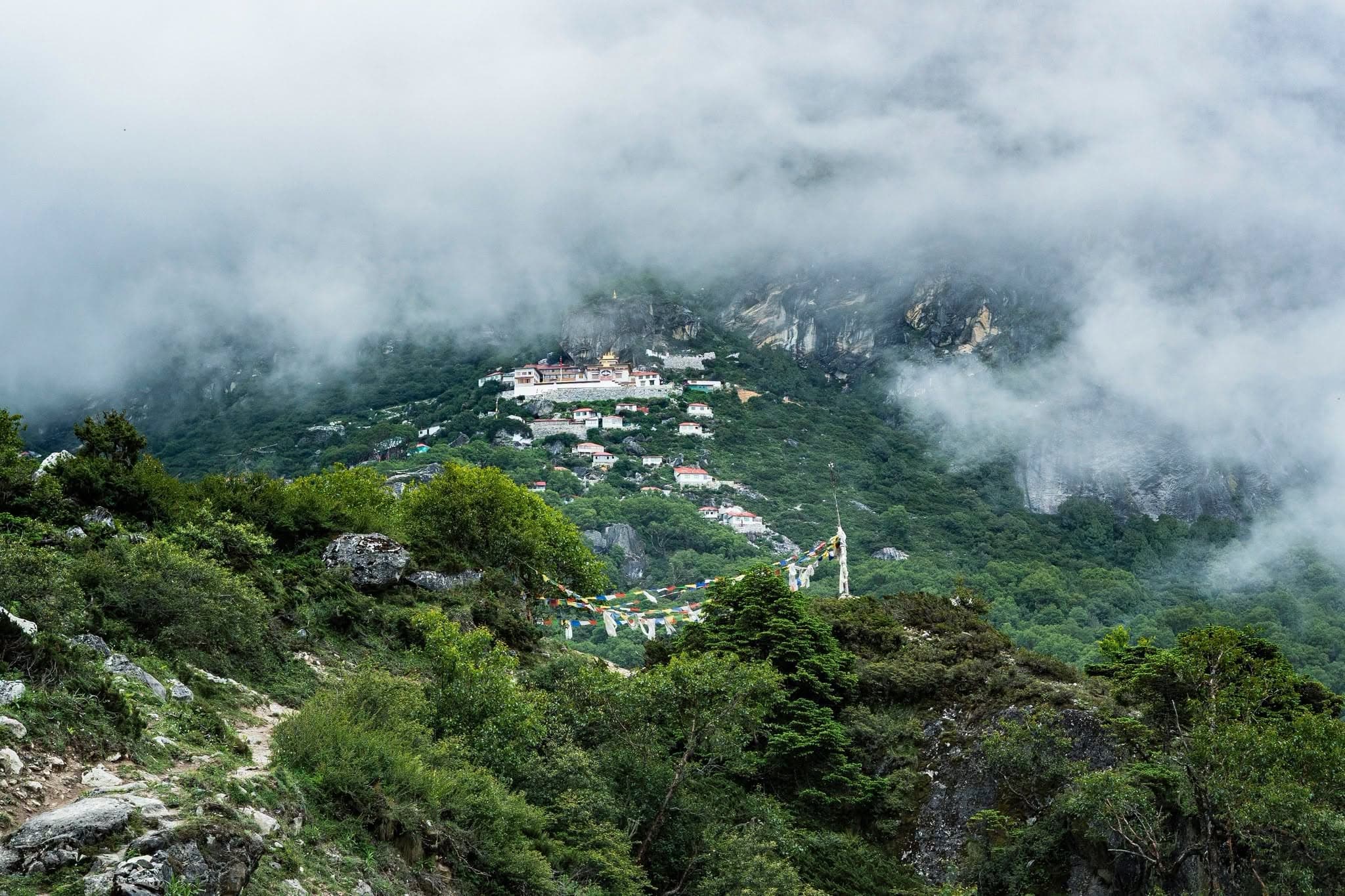
Today, Kathmandu travel agencies sell Lapchi as a two-night jeep tour. One operator, See Nepal Travel & Adventure, advertises a 2N/3D 4WD package for NPR 13,000 per person, including meals and shared rooms. On Facebook and TikTok, reels of prayer flags, yak pastures and snowy border ridges have turned the valley in Bigu Rural Municipality-1 into one of Dolakha's most talked-about destinations.
This change happened quickly. A road being built toward the China border, years of hydropower construction, and the reach of social media have together pushed Lapchi from pilgrims' secret to the travel feeds of Kathmandu.
Why Lapchi matters
Lapchi's pull begins with Milarepa, the Tibetan yogi and poet who lived around 1052–1135. Tradition holds that he meditated for years in the caves around the valley. That makes Lapchi one of the most revered pilgrimage sites in Himalayan Buddhism, often named alongside Mount Kailash.
The valley sits at about 3,776 m. A monastery stands at its centre, with a stupa and a rock said to bear Milarepa's footprint. Several meditation caves lie within a short walk. According to a February 2026 OnlineKhabar feature, Dudul Cave is about 10 minutes from the monastery and Sephuk Cave about two hours. Some practitioners still undertake long retreats there.
Lapchi is also a living settlement. Its families raise yaks and horses, and the village moves to lower ground in winter. That seasonal rhythm, and its closeness to the sacred sites, is part of what visitors come to see. It is also what makes the valley vulnerable to crowds.
The road arrives
Lapchi's opening is tied to the North–South corridor, a planned highway from the Indian border at Bhittamod through Dolakha to the China border. The Lamabagar section has long been the gateway. Before the Tatopani crossing became the main route, it was a trade point between Kathmandu and Lhasa.
Hydropower moved the road first. In October 2022, The Rising Nepal reported that a hydropower developer had opened 825 m of a 1,074 m tunnel at Lamabagar for the corridor. The ward chair said about 12 km of road beyond it would reach the border. The same report noted that more than six private hydropower projects in the Lapche Khola and Jum Khola areas had stalled for lack of road access.
In January 2025, Kantipur reported that the Department of Roads had secured NPR 200 million for a multi-year highway contract. At that point, about 7 km of the 12 km track toward Lapchi had been opened. Local officials said the connection to the border could follow within a year. The rough track now lets jeeps go well beyond Lamabagar in good conditions, which is what makes the weekend packages possible.
Getting there today
Every route follows the Tamakoshi river north from Charikot. It is about 170 km from Kathmandu to Lamabagar: blacktop as far as Charikot, then gravel and dirt past Singati. From Lamabagar, it is roughly 25 km more to Lapchi, by jeep where the new track is open and on foot beyond it.
By bike. Riders usually break the trip at Charikot, then continue to Lamabagar the next day. The last stretch suits dual-sport bikes, and fuel is scarce after Singati.
By bus. A local bus leaves Kathmandu for Lamabagar early each morning. The cheapest plan is to ride the bus, then hike via Lumnang to Lapchi.
On foot. Trekkers take about two days from Lamabagar, sleeping at Lumnang and then in the monastery guesthouse at Lapchi.
By package. Jeep tours cover the round trip in three days, with the valley visited as a day trip from Lamabagar.
For full routes, distances, a six-day trekking itinerary and permit details, see this complete bike, bus and hiking guide to Lapchi from Hikers Himalaya.
Foreign visitors need a restricted area permit arranged through a registered trekking agency, plus a Gaurishankar Conservation Area permit. Nepali citizens need their citizenship card and pay the conservation area fee.
The cost of access
The same construction that opened the valley has made it less stable. On 7 October 2025, Kantipur reported that a large landslide at Deurali had cut the only footpath to Lapchi during peak autumn season. Visitors already in the valley were stranded, and others turned back. The chief of the Gaurishankar Conservation Area told the paper that reopening would take several days. The report linked repeated slides in the area to unplanned road cutting and the use of explosives by private hydropower projects.
Access has always been fragile. Years earlier, The Himalayan Times reported that a flood had washed out the Chyadokhola riverbank and cut the route for months, leaving Lapchi short of food.
The pressures are cultural too. Lapchi's monastery, caves and retreat huts were built for silence. A rise in weekend groups brings noise, plastic and photography to places meant for meditation. The village's lodging is mostly the monastery itself, which has limited room and staff.
There is a commercial question as well. Package tours are typically sold and run from Kathmandu. How much stays in Lamabagar, Lumnang and Lapchi depends on whether visitors sleep, eat and hire guides locally.
What responsible growth could look like
Lapchi does not have to choose between staying hidden and being overrun. Visitors and operators can make a few practical choices that help both the valley and its people:
Travel in the right season. Spring and autumn are safest. Monsoon brings landslides, and in mid-winter the herders leave for lower ground.
Spend locally. Stay in Lamabagar and Lumnang homestays, eat in local kitchens, and hire guides and porters from the area.
Respect the sacred sites. Walk clockwise around stupas, ask before photographing monks, and keep away from retreat huts.
Carry waste out. Lapchi has no system to manage plastic.
Build in a spare day. One landslide can close the only trail.
The road to Lapchi will likely be finished in the coming years. Whether the valley keeps the stillness that made it sacred will depend on how people choose to arrive.
Sources
Lapchi: An exploration of Milarepa paradise, OnlineKhabar English, 6 February 2026
Lapchi across the mountains connecting to the road network, Kantipur, 24 January 2025
Milarepa Cave Trek / Lapchi Kang, Nepalgram Adventure
How to reach Lapchi: bike, bus and hiking guide, Hikers Himalaya
Admin Cherdung
(सविना कार्की)Journalist & Feature Writer • 8 Years in Journalism
Sabina Karki is an experienced Nepali journalist and feature writer with approximately eight years of dedicated reporting covering Nepal’s tourism, aviation, entrepreneurship, and startup ecosystems.

